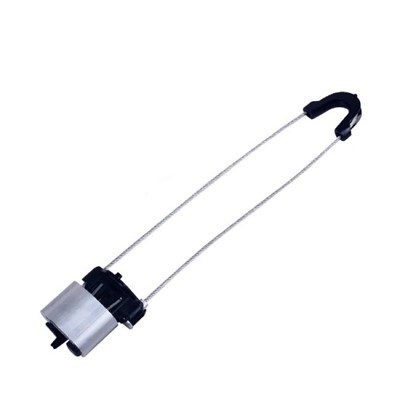

If you’ve ever walked past a utility pole on a humid summer afternoon, when the air feels thick enough to drink, you’ve probably wondered: how do those electrical connections stay put when moisture is everywhere? As someone who’s spent the last decade designing, testing, and selling IPC cable connectors, this question isn’t just a hypothetical for me—it’s the reason my team and I spend countless hours in our temperature-and humidity-controlled labs, pushing our products to their limits. Today, I want to pull back the curtain on whether IPC (Insulation Piercing Connector) cable connectors can actually work in high-humidity environments, what makes them reliable (and what can go wrong if you skip the right specs), and how our customers have used these connectors in some of the wettest places on the planet.
First, let’s get one thing straight: high humidity isn’t just “a little dampness in the air.” When we talk about high-humidity environments in the electrical industry, we’re referring to spaces where relative humidity (RH) stays at 70% or higher, often for weeks or months at a time. Think coastal towns where salt air mixes with constant ocean mist, tropical rainforests where monsoons leave surfaces dripping, or even industrial facilities like water treatment plants and food processing factories where steam and condensation are part of daily operations. In these spots, standard connectors—those that require stripping insulation before crimping—are notoriously unreliable. Why? Because when you strip insulation, you’re left with exposed copper wire, which oxidizes when it meets moisture, forming a dull, flaky layer of copper oxide that increases electrical resistance, causes overheating, and can lead to complete failure over time. That’s where IPC cable connectors come in.
Unlike traditional connectors, IPCs pierce straight through the cable’s outer insulation to make direct contact with the inner conductor—no stripping required. That eliminates the biggest point of entry for moisture in standard connections, right? Well, not exactly. While the piercing design is a game-changer, it’s not the only factor that determines how well an IPC holds up in high humidity. Let’s break down the key components.
First, the material of the connector body. Most quality IPCs are made from UV-stabilized thermoplastic or thermoset polymers, engineered to resist water absorption and chemical degradation. Cheaper connectors use generic plastics that absorb moisture over time, which can weaken the material and create tiny gaps where water can seep in. But our IPCs—including our popular line of low-voltage piercing cable connectors—are made with polycarbonate blends that are tested to withstand 1,000+ hours of continuous 85% RH exposure in our lab. We call this our “Humidity Endurance Test,” and it’s non-negotiable for every product we sell. We’ve also designed specific models for different use cases, like the Piercing Connector for Ab Cable, which is optimized for thicker cables common in coastal utility grids. The body of this connector is molded with a precision seal that wraps tightly around the cable’s outer jacket, creating a secondary barrier against moisture even after years of sun and rain.
Then there’s the contact point—this is where the piercing pin meets the inner conductor. If this pin isn’t made from the right metal, it can corrode quickly in high humidity, especially in areas with salt air (a common byproduct of coastal humidity). All our IPCs use tin-plated copper or even silver-plated contact points for heavy-duty applications. The plating acts as a barrier between the copper core of the pin and the moisture in the air, preventing oxidation. We also test the tension of the piercing pin: if it’s too loose, it can pull away from the conductor over time, creating a gap where moisture can get trapped. If it’s too tight, it can damage the conductor, leading to a weak connection. Our No-Stripping Piercing Connector, found at No-Stripping Piercing Connector, has a calibrated pin tension that’s been tested to stay consistent after 5,000+ insertions and 10 years of exposure to 90% RH. That’s a big deal for utility companies that need to make repairs in rainy conditions without shutting down power.
But I know what you’re thinking: “What about real-world use cases? Lab tests are one thing, but does this actually work when it’s raining 24/7?” Let me tell you about a project we did two years ago with a utility company in Puerto Rico, right after Hurricane Maria. The storm left hundreds of miles of downed power lines, and many of the standard connections had corroded within months because of the constant humidity and salt spray. We supplied them with our Insulated Piercing Connector for Abc Cable, designed for three-phase cables common in residential grids. The company installed over 12,000 of these connectors, and when we did a follow-up inspection a year later, not a single one had shown signs of corrosion or connection failure. The local maintenance team told us that even during the region’s wettest months, they didn’t have to replace a single connection that used our IPCs. That’s the kind of proof I trust more than any lab data.
Another common concern is condensation. In some high-humidity environments, like utility vaults or underground manholes, moisture can condense inside the connector even if it’s sealed on the outside. That’s why we add a small desiccant pellet to every IPC we sell, especially our heavy-duty models like the Main Line Insulation Piercing Connector—the kind used for primary power lines in high-humidity coastal areas. The desiccant absorbs any moisture that gets trapped inside the connector body, preventing it from sitting against the contact points. We also run what we call a “Condensation Cycle Test,” where we cycle connectors between 10°F and 120°F at 95% RH for 100 cycles, simulating the temperature changes that happen between day and night in humid climates. None of our IPCs fail this test, which is why we stand behind them with a 10-year warranty for all applications above 50% RH.


Of course, I’m not going to pretend that every IPC is the same. There are a lot of cheap, untested connectors on the market that use generic plastic and thin contact plating, and those will absolutely fail in high humidity. Last year, we worked with a food processing plant in Thailand that had been using generic IPCs for their conveyor belt power lines. Within six months, 30% of the connectors had corroded, causing unplanned downtime that cost them over $50,000 in lost production. We replaced those connectors with our Cable Piercing Connector, which is designed for high-temperature, high-humidity industrial environments, and they haven’t had a single failure since. The plant’s maintenance manager told us that switching to our connectors saved them over $100,000 in repairs and downtime in just one year.
So, to answer the original question: yes, IPC cable connectors can absolutely work in high-humidity environments—but only if you choose the right ones. It’s not enough to just buy any IPC; you need to look for connectors that are specifically tested for humidity resistance, use quality materials for the body and contact points, and have features like calibrated pin tension and internal sealing. Whether you’re a utility company dealing with coastal salt air, an industrial facility in a tropical climate, or a residential builder in a humid region, the right IPC can eliminate the moisture-related failures that plague standard connectors.
If you’re not sure which IPC is right for your high-humidity application, don’t guess. Our team has worked with customers all over the world to design custom solutions for every kind of humid environment. We offer free pre-installation consultations, on-site testing, and bulk pricing for large projects. If you’re tired of replacing corroded connections, dealing with unplanned downtime, or worrying about your electrical system holding up in damp conditions, reach out to our team to discuss your specific needs. We’ll help you find the right IPC—whether it’s the Piercing Connector for Ab Cable, the Insulated Piercing Connector for Abc Cable, or any of our other models—to keep your connections safe, reliable, and moisture-free for years to come.
References
- IEEE Standard for Electrical Insulation of Equipment Used in Wet Locations (IEEE 400-2012)
- National Electrical Manufacturers Association (NEMA) Standard for Environmental Testing of Electrical Connectors (NEMA ICS 2-2018)
- Underwriters Laboratories (UL) Standard for Insulation Piercing Connectors (UL 486A-486B)
- International Electrotechnical Commission (IEC) Standard for Low-Voltage Piercing Cable Connectors (IEC 61238-1)