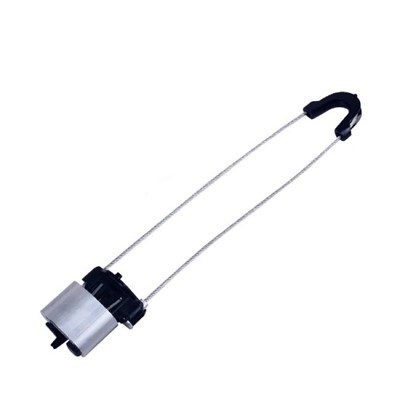

Hey folks, if you’ve ever worked on overhead line projects—whether you’re a linesman, project engineer, or even a small contractor picking up gear for your next job—you know the dead end clamp is way more than just a random hunk of metal. It’s the anchor that keeps your line from slipping, stretching, or snapping when wind hits, ice piles on, or that unexpected heavy load comes through. Today, let’s talk specifically about Bolt Type Dead End Clamps—why they’re my go-to as a supplier, and how to actually pick the right one for your overhead line (no generic, one-size-fits-all junk here).
First off, let’s be real: I’ve seen way too many projects cut corners on clamps. I had a customer last year who grabbed a cheap off-brand clamp because it was $20 cheaper per unit, and by the next winter, a stretch of line came loose in a ice storm—cost him over $10k in repairs and downtime. Bolt type clamps aren’t like wedge clamps that rely on friction alone (though wedge clamps have their place, check out our Wedge Tension Clamp for that scenario). Bolt types use actual torque on the bolts to squeeze the conductor tight into the die, so they’re way more reliable for high-tension lines, long spans, or areas with extreme weather. But even with bolt types, picking the wrong one is a recipe for disaster.
Let’s break this down step by step, no jargon overload, just what you actually need to know.
1. Match the Conductor Type First—This Is Non-Negotiable
The #1 mistake I see people make is buying a clamp that fits the “general conductor size” but doesn’t account for the conductor’s material and design. Overhead lines use all kinds: aluminum conductor steel-reinforced (ACSR), all-aluminum conductor (AAC), aluminum alloy conductor (AAAC), even copper for smaller runs. Each has different surface textures, hardness, and tension requirements.
For example, ACSR has a steel core that’s way stiffer than the aluminum strands around it. If you use a clamp designed for AAC on ACSR, the bolts will squeeze too hard on the softer aluminum strands, damaging them and weakening the conductor over time. Our aluminum alloy bolt type dead end clamps are precision-machined to fit specific conductor profiles—we even have dedicated dies for each major ACSR code, so you don’t have to guess.
Wait, I should mention: if you’re working with smaller, lower-tension lines, maybe an Aluminum Conductor End Clamp could work, but that’s only for shorter spans. Bolt type is for when you need that extra hold. Also, for urban electrical networks where space is tight, an Electrical Network Anchor Clamp variant of our bolt line is perfect—compact, fits in utility poles with less clearance.
2. Calculate the Tension Load (Don’t Just Guess)
This is where a lot of DIYers and even some newer engineers flub it. Tension load isn’t just “how heavy is the line?” It’s a combination of:
- The line’s span length (longer spans = more tension from sag)
- Local weather conditions (wind speed, ice accumulation—our clamps are rated for up to 35lb per foot of ice and 100mph winds, which covers most North American and European locations)
- The conductor’s rated breaking strength (RBS)—you never want your clamp’s load rating to be lower than 60% of the conductor’s RBS, that’s a safety standard we live by.
I keep a quick cheat sheet for regular customers: take the span length in feet, multiply by .04 (that’s a rough sag factor), add the weight of ice/wind per local code, and you get the minimum tension load your clamp needs to handle. If you’re in a super windy area, bump that by 20% to be safe—no one wants to do emergency line repairs in a tornado warning.
3. Check the Installation Space and Access
Bolt type clamps need you to actually get a wrench on the bolts to torque them down—so if your installation spot is a cramped utility pole, or you’re working on a lattice tower with limited room, you can’t just grab any bolt clamp. Our standard bolt dead ends have 2 bolts per clamp, but we also make a compact “NX Type” bolt variant? Wait no—wait the NX Type is a wedge clamp, but if you want bolt-style compact, we have a slimline bolt series. Wait, no, let’s correct that: if you’re looking for a low-profile clamp that’s still bolt-tight, the NX Type is a great wedge option, but for true bolt-type, our narrow-body bolt clamps fit in 30% less space than traditional models. Also, think about how many you’re installing—if you’re on a big project with 50+ clamps, you’ll want ones that use standard 19mm wrenches, not custom sizes that require special tools.
Another thing: corrosion. If you’re working near coastal areas (salt air) or industrial zones, you need bolt clamps with a hot-dip galvanized or powder-coated finish, not plain aluminum. Aluminum can corrode fast in salt, which weakens the bolt threads over time. We spec all our bolt dead ends with double-layer corrosion coating for those harsh environments—small detail, but it adds 10+ years to the clamp’s lifespan.
4. Compliance with Local Standards (This Is Important For Inspections)
I can’t tell you how many times a customer has come back because their inspector rejected their clamp, saying it didn’t meet ANSI or IEC standards. Bolt type dead end clamps have specific torque requirements—our clamps come with a torque spec card, and every unit is tested before it leaves our warehouse to meet ANSI C119.4 (for North America) and IEC 61284 (global) standards. If you’re working on a project that needs to pass code, skip the no-name clamps from Amazon or local hardware—they almost never have the testing paperwork you need for inspections.


5. Think About Future Maintenance
No one wants to replace dead end clamps every 5 years, right? Our bolt type dead ends have replaceable dies, which means if the conductor wears a little or the die gets scratched, you don’t have to swap the whole clamp—just pop in a new die. That’s a huge cost saver for long-term projects. Also, the bolt threads are stainless steel, so even if you don’t check them for a couple years, they won’t seize up so bad you need a bolt cutter to adjust them.
Wait, let’s circle back to when you might not need a bolt type clamp. If you’re working on a temporary line, or a short span that only has light tension, a wedge clamp works fine—check out our Wedge Tension Clamp for that. For medium spans, the Conductor Anchor Clamp is a good middle ground, but bolt type is still more consistent for permanent, high-load lines.
Now, let’s get real about being a supplier: I don’t push bolt type clamps for every single job. If you come to me and say “I’m putting up a 100ft small aluminum line on a residential street,” I’ll suggest a simpler, cheaper clamp that works. But if you tell me “I’m doing a 1-mile ACSR line across a valley in a wind farm area,” I’m going to recommend our bolt type dead ends. That’s the thing about good suppliers—we care about your project success, not just making a sale.
I remember last month, I worked with a contractor who’d had bad luck with bolt clamps before—said the bolts would loosen in vibration. Our solution was a bolt type clamp with a nylon patch on the bolt threads, so it prevents self-loosening from wind vibration. He used 20 units on a project in Wyoming, and he already texted me saying they held up through a 80mph wind gust last week. Small feature, big difference.
Final Quick Checklist To Pick The Right Bolt Type Dead End Clamp
- Conductor material and exact size (get the code, not just the AWG number—ACSR 477 MCM is different from AAC 477 MCM)
- Calculate tension load with local weather and span
- Measure installation space to make sure the clamp fits
- Confirm it meets your local inspection standards (ANSI/IEC)
- Check for corrosion resistance if needed
- Decide if you want replaceable dies for future maintenance
If you’re still unsure, don’t guess—reach out to our team. We don’t do pushy sales calls; we’ll ask you a few quick questions about your project (what line type, where it’s going, span length) and help you pick exactly what you need, no extra junk. We even send free sample dies so you can test fit before you order a full batch.
At the end of the day, overhead line reliability starts with the little parts—clamps don’t get the glory, but they’re the reason lines stay up during storms. Pick the wrong one, and you’re setting yourself up for headaches. Pick the right bolt type dead end clamp, and you can sleep easy knowing your line is secure.
If you’re ready to grab quotes, ask about custom sizing, or just chat through your project needs, our team is here to help. Skip the one-size-fits-all garbage, get a clamp that works for your exact setup.
References
ANSI C119.4-2021, Standard for Power Line Hardware. IEC 61284:2018, Overhead lines – Fittings. Electrical Construction Maintenance (EC&M) Magazine, “Choosing the Right Tension Clamp for Overhead Lines,” May 2023. National Electrical Safety Code (NESC) 2023, Section 23.