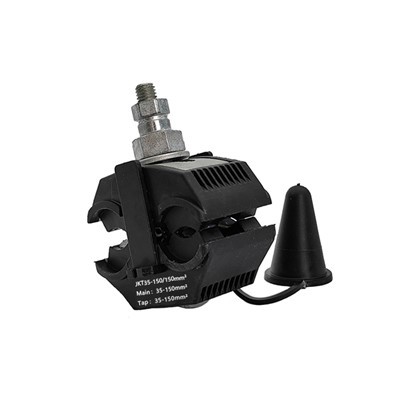

Hey there! As a supplier of Wire Piercing Connectors, I often get asked a bunch of questions, and one that pops up quite a bit is, "Are wire piercing connectors resistant to UV radiation?" Let's dig into this topic and find out what's what.
First off, let's quickly go over what wire piercing connectors are. These little guys are super handy in electrical work. They're designed to pierce through the insulation of wires, making an electrical connection without the need to strip the insulation completely. It's a time - saver and a great solution for a lot of wiring tasks. You can find various types of them on our website, like Cable Piercing Connector and Self Piercing Tap Connectors and Piercing Wire Connector.
Now, back to the UV radiation question. UV radiation comes from the sun, and it can be pretty harsh on a lot of materials. When materials are exposed to UV rays over time, they can start to break down, become brittle, or change their physical properties. This is a big deal when it comes to electrical connectors because any damage to the connector can lead to poor electrical connections, which can cause all sorts of problems, from electrical shorts to power outages.
The short answer to whether wire piercing connectors are resistant to UV radiation is: it depends. A lot of factors come into play, like the materials the connectors are made of and the level of UV exposure they'll face.
Materials Matter
Most wire piercing connectors are made from a combination of metals and plastics. The metal parts, like the piercing blades and the conductive components, are generally not affected by UV radiation. Metals are pretty tough and can withstand the sun's rays without much change in their electrical or physical properties.


However, the plastic components of the connectors are a different story. Plastic is more vulnerable to UV damage. Many common plastics used in electrical connectors, such as PVC (polyvinyl chloride) and polycarbonate, can degrade when exposed to UV light. Over time, the UV rays can break down the chemical bonds in the plastic, causing it to become brittle and crack. This can be a huge problem for wire piercing connectors because the plastic often serves as an insulator and a protective housing for the metal parts. If the plastic cracks, it can expose the metal to moisture, dust, and other contaminants, which can then lead to corrosion and poor electrical performance.
But here's the good news. Some manufacturers, including us, use special UV - resistant plastics in our wire piercing connectors. These plastics are formulated with additives that absorb or reflect UV radiation, protecting the plastic from damage. They're more expensive than regular plastics, but they offer a much longer lifespan when the connectors are used in outdoor environments. For example, we use a type of high - density polyethylene (HDPE) that has excellent UV resistance properties. This material can withstand years of sun exposure without significant degradation, making our connectors a reliable choice for outdoor applications.
Level of UV Exposure
Another important factor is the level of UV exposure the connectors will experience. If the connectors are installed in an area that gets a lot of direct sunlight, like on a rooftop or in a desert environment, they'll be exposed to higher levels of UV radiation compared to connectors installed in a shaded or indoor area.
For high - UV areas, it's crucial to choose connectors that are specifically designed for outdoor use and have a high level of UV resistance. We offer a range of connectors that are rated for outdoor applications, and we can provide you with detailed information about their UV resistance capabilities. On the other hand, if the connectors are going to be used indoors or in a shaded area, the UV exposure is much lower, and you may be able to get away with using connectors that have a lower level of UV resistance.
Testing and Certification
To make sure our wire piercing connectors are up to the task, we put them through a series of rigorous tests. One of the most important tests is the UV exposure test. In this test, we expose the connectors to artificial UV light for a specified period of time, simulating years of outdoor exposure. We then check the connectors for any signs of degradation, such as cracking, discoloration, or changes in electrical properties.
We also make sure our connectors meet industry standards and certifications. For example, many of our connectors are UL - listed, which means they've been tested and approved by Underwriters Laboratories, a well - known independent safety science company. UL has specific requirements for UV resistance in electrical connectors, and our products meet or exceed these requirements.
Real - World Applications
Let's look at some real - world applications to see how UV resistance plays a role. One common use for wire piercing connectors is in outdoor lighting systems. Whether it's landscape lighting in a garden or streetlights in a city, these connectors are often exposed to the sun's rays. In these applications, UV - resistant connectors are essential to ensure long - term reliability. If the connectors degrade due to UV exposure, the lights may start to flicker or stop working altogether, which can be a real headache for homeowners or city maintenance crews.
Another application is in solar power systems. Solar panels are typically installed outdoors, and wire piercing connectors are used to connect the panels to the rest of the system. Since these connectors are constantly exposed to sunlight, they need to be able to withstand UV radiation. Using non - UV - resistant connectors in a solar power system could lead to premature failure of the connectors and reduced efficiency of the entire system.
Making the Right Choice
When you're choosing wire piercing connectors for your project, it's important to consider the UV exposure. If you're not sure whether your application requires UV - resistant connectors, just ask us. We're here to help you make the right choice. We can look at the details of your project, including the location, the amount of sunlight the connectors will receive, and the specific requirements of your electrical system, and recommend the best connectors for you.
In conclusion, wire piercing connectors can be resistant to UV radiation, but it depends on the materials and the level of exposure. By choosing connectors made from UV - resistant plastics and ensuring they're suitable for your specific application, you can ensure a long - lasting and reliable electrical connection.
If you're in the market for wire piercing connectors and want to learn more about our products, or if you have any questions about UV resistance or other features, don't hesitate to reach out. We're always happy to have a chat and help you find the perfect connectors for your needs. Whether you're a DIY enthusiast working on a small home project or a professional electrician handling a large - scale commercial job, we've got the connectors you need.
References
- Electrical Connector Handbook: Covers general information about electrical connectors, including materials and testing.
- UL Standards for Electrical Connectors: Provides detailed requirements for safety and performance, including UV resistance.