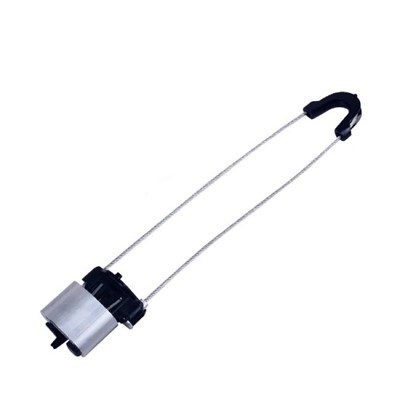

Hey there! I'm a supplier of Bolt Type Dead End Clamps, and today I wanna chat about something that often comes up in the electrical industry: the installation distance between multiple Bolt Type Dead End Clamps.
First off, let's understand what Bolt Type Dead End Clamps are. They're crucial components in overhead power lines. These clamps are used to terminate and anchor conductors at the end of a line, providing a secure connection that can withstand mechanical stress and electrical loads.
So, why does the installation distance matter? Well, it's all about ensuring the safety and efficiency of the power transmission system. If the distance between the clamps is too short, there could be issues like increased mechanical stress on the conductors, which might lead to premature wear and tear. On the other hand, if the distance is too long, the conductors might not be properly supported, increasing the risk of sagging and potential contact with other objects.
Now, determining the right installation distance isn't a one - size - fits - all deal. There are several factors that come into play.
Factors Affecting Installation Distance
Conductor Type and Size
Different conductors have different mechanical properties. For example, larger conductors are generally stiffer and can span longer distances between clamps. Smaller conductors, on the other hand, are more flexible and might require closer spacing between the clamps to prevent excessive sagging. If you're using a high - voltage transmission line with large - diameter aluminum conductors, you can typically have a greater distance between the Bolt Type Dead End Clamps compared to a low - voltage distribution line with smaller copper conductors.
Environmental Conditions
The environment where the power line is installed has a huge impact on the installation distance. In areas with high wind speeds, for instance, the conductors are subjected to more dynamic forces. To counteract these forces and prevent the conductors from swinging too much, the clamps need to be placed closer together. Similarly, in regions with heavy snow or ice loads, the additional weight on the conductors means that shorter distances between the clamps are necessary to support the extra load.
Line Tension
The tension in the conductor is another key factor. Higher tension in the conductor allows for a greater distance between the clamps. When the conductor is under high tension, it is more rigid and less likely to sag. However, setting the right tension is a delicate balance. Too much tension can cause excessive stress on the conductor and the clamps, while too little tension can lead to sagging and safety hazards.
General Guidelines for Installation Distance
While there's no fixed rule for the installation distance between multiple Bolt Type Dead End Clamps, some general guidelines can be followed.
For low - voltage distribution lines with relatively small conductors (say, up to a few square millimeters in cross - sectional area), the distance between the clamps might range from 10 to 20 meters. This is because these lines are often installed in urban areas where there are more obstacles and the conductors need to be well - supported to avoid interference.
In high - voltage transmission lines with large - diameter conductors, the distance can be significantly greater. It could range from 50 to 100 meters or even more in some cases. These lines are usually installed in open areas where there are fewer obstacles, and the conductors can handle the longer spans under proper tension.
It's important to note that these are just rough estimates. Before any installation, a detailed engineering analysis should be carried out. This analysis takes into account all the factors mentioned above to determine the optimal installation distance for a specific project.
Other Related Clamps
In addition to Bolt Type Dead End Clamps, there are other types of clamps that are used in power line installations. For example, the Bolted Type Tension Clamp is similar in function but might have different installation requirements. It's often used in situations where a more adjustable tension is needed.
The Wedge Strain Clamp is another option. It uses a wedge - shaped design to grip the conductor. This type of clamp is known for its high grip strength and is commonly used in areas with high mechanical stress.
And then there's the Aluminum Dead End Clamp, which is made of aluminum and is lightweight yet durable. It's a popular choice for many power line projects.
Importance of Quality Clamps
No matter what the installation distance is, using high - quality clamps is essential. Poor - quality clamps can lead to a host of problems, such as loose connections, increased electrical resistance, and even mechanical failures. At our company, we take pride in offering top - notch Bolt Type Dead End Clamps. Our clamps are made from high - grade materials that can withstand the harshest environmental conditions and mechanical stresses. They're designed to provide a secure and long - lasting connection for your power lines.


Contact for Procurement
If you're in the market for Bolt Type Dead End Clamps or any of the other related clamps I mentioned, don't hesitate to reach out. We have a wide range of products to meet your specific needs. Whether you're working on a small - scale distribution line project or a large - scale transmission line installation, we can provide the right solution for you. Contact us to start the procurement process and let's work together to ensure the safety and efficiency of your power transmission system.
References
- Electrical Power Transmission System Engineering: Analysis and Design, by Turan Gonen
- Overhead Transmission Line Engineering, by E. W. Kimbark