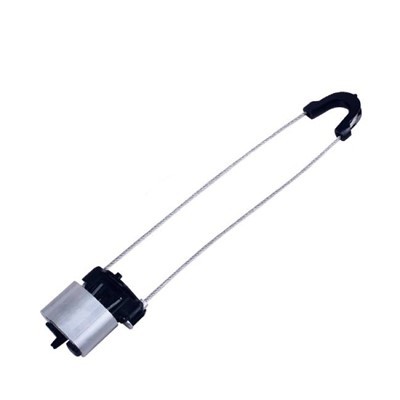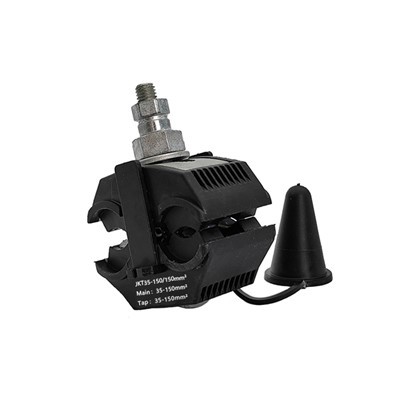

Hey there, if you’re working with ADSS (All-Dielectric Self-Supporting) tension clamps and wondering why some installations just don’t hold up as well as you’d hope—you’re not alone. As a supplier who’s spent years troubleshooting these clamps for utility teams and telecom operators, I’ve seen everything from premature cable slippage to clamp cracking before their time. The good news? Most performance issues aren’t because the clamp itself is bad—they’re because of small, avoidable mistakes in how you spec, install, or maintain it. Let’s break down the real, actionable stuff that’ll make your ADSS tension clamp work harder, last longer, and keep your lines running smooth.
First, let’s get one thing straight: not all tension clamps are created equal for ADSS cables. I’ve had customers reach out because they grabbed a generic clamp off the shelf, only to find it didn’t match their cable’s diameter or tension rating. That’s why picking the right clamp type for your exact setup is the first big step. For example, if you’re dealing with medium to heavy tension spans (common in rural telecom lines), a wedge type tension clamp is usually the go-to. The wedge design distributes clamping force evenly along the cable’s jacket, which prevents that “pinching” that can damage the ADSS fiber core or cause slippage. Wait, but don’t sleep on dead end cable clamps either—those are perfect for terminal points where the cable needs to be secured at the tower end. I’ve also worked with folks doing distribution grid work; anchoring tension clamps are engineered specifically for that use case, handling the daily load fluctuations from wind and temperature changes way better than generic options. If you’re using ABC (Aerial Bundled Cable), dead end clamp for ABC cable is non-negotiable—they’re designed to grip multiple conductors at once without slipping, which is a total game-changer for distribution runs. And for electrical distribution anchors that need to play nice with existing infrastructure, electrical distribution anchor clamps fit right in with standard pole hardware without extra modifications. The key here is: skip the one-size-fits-all approach. Check the clamp’s spec sheet against your cable’s outer diameter, maximum tension load, and the environment (wind, ice, temperature swings) of your route. I always tell new customers: if you’re unsure which clamp fits, send over your cable specs and your span details—no need to guess.
Now, once you’ve got the right clamp, installation is where most people mess up. I see this all the time: techs rush through stripping the cable jacket, leaving burrs or uneven edges that catch on the clamp’s inner surface. ADSS cables have a thin outer jacket that protects the fiber core inside—if you nick that jacket when stripping, you’re already weakening the cable, and the clamp won’t hold as intended. The rule of thumb here is: use a sharp, specialized cable stripper (not a utility knife—trust me, I’ve seen knives slip and ruin more jobs than you can count) to remove exactly the length of jacket the clamp requires. Most clamp manufacturers (including us) put that length right on the spec sheet—stick to it. If you leave too much jacket exposed, the wedge or grip mechanism might not clamp all the way; too little, and you’re damaging the core. Next, when you’re seating the cable in the clamp, make sure it’s aligned straight, no twists or kinks. I’ve had a customer whose tech skipped this step, and after a heavy wind event, the cable twisted in the clamp, causing uneven tension and slippage that took days to fix. For wedge type tension clamps especially: you need to tighten the clamp’s hardware to the exact torque spec, not just “snug.” Over-tightening can crack the clamp’s plastic body (wait, right—most modern ADSS clamps are plastic, which is lightweight and corrosion-resistant, but brittle if you crank too hard), and under-tightening is obvious, but both lead to poor performance. Pro tip: keep a torque wrench handy during installs— it takes 2 extra minutes and saves you from headaches later.
Environment is another big factor that crushes ADSS tension clamp performance, and it’s one that’s easy to overlook. If you’re installing in a coastal area, for example, salt spray eats away at metal hardware on clamps (wait, no—most ADSS clamps have plastic bodies, but the mounting bolts are often metal). Make sure the clamp’s hardware is galvanized or coated for corrosion resistance. In cold climates, plastic clamps can get brittle—so pick clamps rated for low temperatures (like -40°C) that won’t crack when you’re installing in -20°F weather. In super hot, desert areas, plastic can soften a little over time, which means the clamp might not hold tension as well. The fix here is simple: spec clamps with UV-stabilized plastic bodies. UV rays from the sun break down plastic fast, especially in areas with little tree cover. I once sold a batch of clamps to a customer in Arizona who skipped UV stabilization, and a year later half the clamps were cracked from sun exposure. Don’t be that guy—ask for UV-rated clamps if your route is exposed. Also, ice loading: in areas where ice builds up on cables, that adds massive extra tension. Double-check your clamp’s maximum tension rating to make sure it can handle the ice-plus-wind load for your span. If not, upgrade to a higher-rated clamp— it’s cheaper than repairing a line failure mid-storm.


Wait, also—don’t forget about the cable’s tension before you install the clamp. ADSS cables are pre-tensioned at the factory, but when you’re pulling them up the pole, the tension can shift. If you install the clamp when the cable is under uneven tension, the clamp will sit crookedly, and the grip will be uneven. I’ve had techs just hook the clamp and tighten it without checking the cable’s sag—using a sag calculator to set the correct sag before clamping is non-negotiable. That’s especially important for long spans (over 100 meters), where even a little sag error can lead to way more tension on the clamp than it’s designed for.
Maintenance is something most people skip entirely, but it makes a huge difference in long-term performance. You don’t need to climb every pole every month, but a quick annual check during off-seasons is smart. What to look for: first, check for any signs of jacket damage around the clamp. If the jacket is cracked or frayed, moisture could be getting in, which will ruin the fiber core over time. Then, check the clamp’s hardware—are the bolts still tight? Wind and temperature changes can make bolts loosen slowly, which weakens the clamp’s grip on the cable. And inspect the clamp body itself for cracks, especially in areas near the mounting point. If you see a crack, replace the clamp right away— don’t wait for it to fail. I’ve had customers wait until a storm, and then the clamp breaks, the cable snaps, and they’re out thousands in repairs. Also, if you’re in a dusty area, sometimes dirt can build up inside the clamp’s grip mechanism, which makes it harder to clamp down tight. A quick wipe with a dry cloth every couple of years is enough to keep that working.
Another thing: if you’re replacing a clamp on an existing line, don’t just swap it out for the same old one. Look at why the old one failed. If it slipped, the old clamp was probably the wrong size for the cable, or the hardware wasn’t torqued right. If it cracked, maybe it wasn’t rated for the environment. Use that as a chance to upgrade—like if you had an old clamp that wasn’t UV-stabilized, replace it with a UV-rated one next time.
Now, let’s talk about common myths I hear all the time. Myth #1: “A heavier clamp is better.” No—for ADSS, too much weight can actually be bad, especially on long spans where you don’t want extra load on the cable. Stick to the clamp weight specified for your cable’s weight rating. Myth #2: “Plastic clamps are flimsy and weak.” That’s outdated—modern plastic clamps are engineered with high-strength polymers that match or exceed metal clamps for tension resistance, and they don’t corrode. Myth #3: “Installation is the only thing that matters once the clamp is up.” No—like I said, environment and maintenance play a huge role.
At the end of the day, improving ADSS tension clamp performance isn’t rocket science—it’s about doing the basics right: pick the right clamp for your setup, install it correctly with proper tools, account for your environment, and do regular checks. If you’re still not sure which clamp fits your needs, or you need help troubleshooting a current installation, reach out. We work with utility teams, telecom operators, and contractors all over, and we can help you spec the right clamp, answer installation questions, or even walk you through maintenance tips. Don’t let a bad clamp ruin your line’s performance—get it right the first time.
If you’re looking to upgrade your ADSS tension clamps, or just want to chat through your project details, feel free to get in touch with our team to start the conversation about finding the best solution for your setup.
References
- International Electrotechnical Commission (IEC) 61300-3-35: Fibre optic interconnecting devices and passive components – Part 3-35: Basic test and measurement procedures – Tension test for aerial cable installations
- Telecommunications Industry Association (TIA) TIA-598-C: Optical fiber cable color coding and identification for telecommunications
- ANSI C119.4: Testing of fiber optic aerial cable supporting structures and accessories
- American Iron and Steel Institute (AISI) specifications for corrosion-resistant metal hardware for overhead electrical and telecommunications infrastructure
- ISO 10472: Fiber optic cables – All-dielectric self-supporting (ADSS) cables for overhead applications