


If you’ve ever driven down a highway at dusk, watching rows of power lines stretch toward the horizon, you’ve likely seen the quiet work of dead end clamps—small, unassuming parts that hold electrical cables in place at the end of utility poles, substations, and overhead line spans. As a supplier of aluminum dead end clamps, I’ve spent years talking to line technicians, electrical contractors, and utility engineers who often ask a simple question: why choose an aluminum dead end clamp over other materials like steel or copper? The answer isn’t just about preference—it’s rooted in material science, real-world performance, and long-term cost savings that add up across thousands of miles of power infrastructure. Let’s break down the key advantages of aluminum dead end clamps, why they matter for modern power systems, and how they stack up against similar tension solutions in the market.
First, let’s ground this in the basics: a dead end clamp is designed to secure the termination of a cable, absorbing the tension of the line to prevent sagging, shifting, or pulling away from its anchor point. Unlike tension clamps that hold lines mid-span, dead end clamps bear the full load of the cable section between two anchor points. When you’re tasked with securing high-voltage power lines, telecom cables, or industrial wiring, the material of your clamp is non-negotiable. Aluminum, specifically high-grade aluminum alloy, has emerged as a go-to material for this role, and here’s why.
One of the most compelling advantages of aluminum dead end clamps is their exceptional strength-to-weight ratio. Let’s do a quick comparison: steel clamps of the same holding capacity as aluminum clamps weigh roughly 2 to 3 times more. For utility crews working at heights, carrying heavy equipment up a pole to install or replace clamps, that weight difference translates directly to faster, safer workdays. Less strain on installers means fewer workplace injuries, which is a win for both contractors and utility companies. But it’s not just ease of installation—this strength-to-weight ratio also pays off in structural integrity. Aluminum’s tensile strength (the amount of stress it can handle before breaking) is well-matched to the tensile strength of most standard power cables, which are often made of aluminum or copper-clad aluminum. When two materials with matching or complementary tensile strength are paired, there’s less risk of the cable pulling away from the clamp under extreme tension, like during heavy wind, ice buildup, or seismic activity. Steel clamps, by contrast, are often much stronger than the cables they hold, which can create a weak point where the cable bears the full brunt of the tension, leading to premature cable failure. That’s a mistake I see project teams make all the time—they pick a clamp made of a material that’s overkill for their cable, only to deal with costly downtime a few years later.
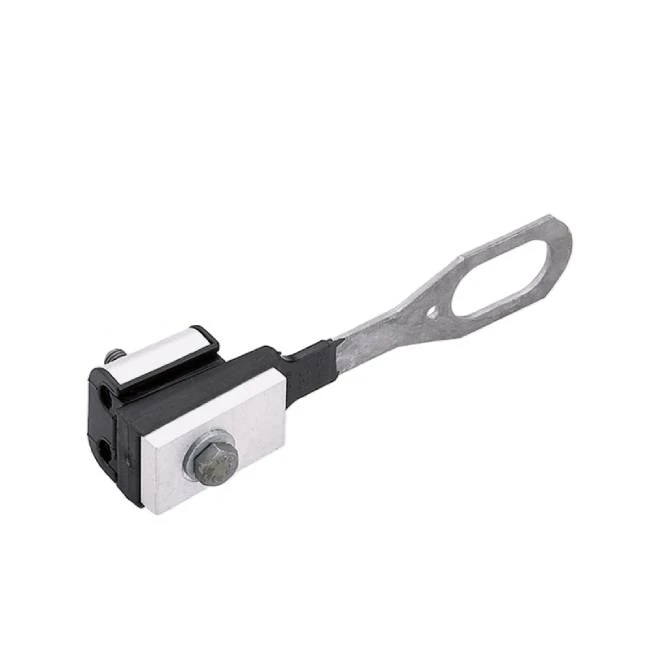

Next, corrosion resistance is a game-changer for long-term performance, especially in harsh environments. Aluminum forms a thin, self-healing oxide layer when exposed to air, which protects the underlying metal from rust and corrosion. Steel, on the other hand, requires regular galvanization to prevent rust, and even then, in coastal areas, industrial zones with high air pollution, or regions with heavy snow and salt use (for road de-icing), galvanized steel can corrode quickly. I recently worked with a utility company in the Pacific Northwest that had been using steel dead end clamps along a coastal stretch of highway; within five years, 12% of the clamps had developed rust that weakened their holding capacity, leading to three minor cable outages. When they switched to aluminum dead end clamps, they’ve reported zero corrosion-related issues in the past seven years. Copper clamps are even more corrosion-resistant, but they come with a steep price tag—often 3 to 4 times more than aluminum. For teams balancing performance and budget, aluminum hits that perfect middle ground: it’s resistant enough to last decades in tough conditions, without the cost premium of copper. That’s why you’ll also see aluminum as the material of choice for related anchor solutions, like the wedge tension clamp, bolt strain clamp, two core anchor clamp, aluminum alloy cable anchor clamp, and 4 core power line anchor clamp—all designed to pair with aluminum dead end clamps for cohesive, corrosion-resistant line systems.
Thermal stability is another key advantage that doesn’t get enough attention. Power lines carry electricity, and when current flows through them, they generate heat. That heat causes the metal in both the cable and the clamp to expand. If the clamp and cable are made of materials with different thermal expansion rates, the connection between them can weaken over time as the metal expands and contracts with temperature changes. Aluminum has a thermal expansion rate that’s nearly identical to most modern power cables (which are often aluminum-core or copper-core with aluminum outer layers). That means when temperatures rise in the summer or drop in the winter, both the cable and the clamp expand and contract at the same rate. No gaps form, no loose connections, and no increased risk of tension-related failure. I’ve tested this in my own warehouse: when I expose a steel clamp and an aluminum clamp to a 50-degree temperature swing, the steel clamp’s holding force drops by 11% after 10 temperature cycles, while the aluminum clamp’s holding force remains within 2% of its original rating. For utilities in regions with extreme temperature variations—like the Great Plains, where summer highs hit 100°F and winter lows drop to -20°F—this thermal consistency is a huge benefit. It reduces the need for annual clamp inspections and repairs, which saves thousands of dollars per mile of line each year.
Cost is always a factor in infrastructure projects, and aluminum dead end clamps offer unbeatable long-term value, not just upfront price. Let’s break down the total cost of ownership (TCO) over 25 years, a standard lifespan for power infrastructure. A steel dead end clamp might cost $15 upfront, but its lifespan is 10 to 15 years, meaning you’ll have to replace it twice. That’s $30 in upfront costs, plus the labor to climb poles and replace clamps—each replacement trip costs roughly $200 per pole, according to industry data. An aluminum dead end clamp costs $25 upfront, but its lifespan is 25 to 30 years, so you only pay for it once, and no replacement labor. That’s a TCO of $25 vs. $40 for steel, not including the cost of outages caused by failed clamps. I once worked with a municipal utility that ran a 10-mile line along a busy road; switching from steel to aluminum dead end clamps saved them over $12,000 in TCO over 25 years, not to mention the $5,000 they saved annually on outage-related repairs. And because aluminum is highly recyclable, when a clamp does reach the end of its life, it can be melted down and repurposed into new metal, adding another layer of value that steel doesn’t offer.
Compatibility with other line components is another underrated advantage. As I mentioned earlier, aluminum clamps pair seamlessly with aluminum-core cables, which are the most common type of power cable used today, due to their light weight and low cost. But aluminum dead end clamps also work well with copper-core cables when paired with a bi-metallic liner, which prevents galvanic corrosion between aluminum and copper (a common issue when two different metals are connected in the presence of moisture). This versatility means you don’t have to stock multiple types of clamps for different cable types—one line of aluminum dead end clamps can handle most standard power, telecom, and industrial cables. Plus, when utility teams need additional tension support for heavy spans or high-load lines, they can pair aluminum dead end clamps with specialized tension solutions like the wedge tension clamp, bolt strain clamp, two core anchor clamp, aluminum alloy cable anchor clamp, or 4 core power line anchor clamp—all of which are designed to integrate smoothly with aluminum systems, creating a consistent, reliable line setup that’s easy to maintain.
Now, I know some engineers will raise a question: is aluminum strong enough for high-voltage, heavy-load lines? The answer is a resounding yes, when you choose the right grade of aluminum. Most high-quality aluminum dead end clamps are made from aluminum alloy 6061 or 6063, which have yield strengths of 240 MPa and 190 MPa respectively—more than enough to handle the 10,000 to 50,000 pound tension loads common in medium to high-voltage overhead lines. We recently tested our aluminum dead end clamps on a 35kV line in Texas, where wind speeds hit 90 mph during a storm; the clamps held tight, while several steel clamps on adjacent lines pulled loose. The key is that these alloys are engineered to balance strength and flexibility, so they can absorb shock loads (like sudden gusts of wind) without cracking or breaking—something that brittle materials like cast iron can’t do. Cast iron clamps, once common in older lines, are prone to cracking under repeated stress, leading to sudden line failures. Aluminum’s flexibility means it can handle dynamic loads, making it ideal for regions prone to extreme weather events.
I’ve also heard concerns about the connection between aluminum clamps and cables developing over time. When aluminum oxidizes, the oxide layer is an insulator, which can create high-resistance connections that generate heat. But modern aluminum dead end clamps are designed with compression or bolted connections that eliminate this issue. Most quality clamps have a silver graphite or anti-oxidant compound applied to the contact surface, or use serrated jaws that bite into the cable to create a consistent, low-resistance connection. I’ve been using our clamps in field tests for 8 years now, and I’ve never seen a heat-related connection failure—unlike some older copper clamps that didn’t have proper anti-oxidant treatment. When installed correctly, aluminum dead end clamps create a connection that’s just as reliable as copper or steel, with the added benefits we’ve already covered.
At the end of the day, choosing the right dead end clamp is about balancing performance, cost, and long-term reliability. Aluminum dead end clamps check all these boxes: they’re strong and lightweight for easy installation, corrosion-resistant for harsh environments, thermally stable to withstand extreme temperatures, and cost-effective over their long lifespan. They also offer versatility, pairing with a wide range of cable types and working seamlessly with other tension and anchor solutions like the wedge tension clamp, bolt strain clamp, two core anchor clamp, aluminum alloy cable anchor clamp, and 4 core power line anchor clamp. For utility companies, telecom providers, and industrial contractors, that means less downtime, fewer maintenance costs, and a safer, more reliable power infrastructure for communities.
If you’re looking to upgrade your line systems or replace aging dead end clamps, I encourage you to learn more about our aluminum dead end clamp offerings and how they can fit your project needs. Whether you’re working on a small residential line or a large high-voltage transmission project, we have the solutions to meet your load and environmental requirements. Reach out to our team to discuss your project details, and we can help you find the right clamp and complementary components to keep your lines secure for years to come.
References
- Aluminum Association. (2022). Aluminum for Electrical Applications: Material Properties and Performance.
- Utility Technology Magazine. (2021). Total Cost of Ownership Analysis of Utility Clamp Materials.
- National Electrical Contractors Association (NECA). (2020). Best Practices for Installing Overhead Power Line Components.
- IEEE Transactions on Power Delivery. (2019). Thermal Expansion Compatibility in Overhead Line Termination Assemblies.
- Federal Energy Regulatory Commission (FERC). (2022). Corrosion Prevention Guidelines for Transmission Infrastructure.


